
Health
New research finds 5 genetic signatures shared by 14 psychiatric disorders
Human brain with DNA strand. 3d illustration
Could advance treatment of mental illness with greater precision, less medication
Distinct psychiatric disorders have more in common biologically than previously believed, according to the largest and most detailed analysis to date of how genes influence mental illness.
The study, led by researchers at University of Colorado Boulder, Harvard, and Mass General Brigham, examined DNA data from more than 1 million individuals diagnosed with at least one of 14 psychiatric disorders and 5 million with no diagnoses.
The study’s findings were published Dec. 10 in the journal Nature.
Working in collaboration with the international Psychiatric Genomics Consortium Cross-Disorder Working Group, investigators discovered that five underlying “genomic factors” involving 238 genetic variants made up the majority of the genetic differences between those with a particular disorder and those without it.
The five categories
The disorders are grouped into five categories, each with a shared genetic architecture, including: disorders with compulsive features such as anorexia nervosa, Tourette disorder and obsessive-compulsive disorder (OCD); “internalizing conditions” including depression, anxiety, and post-traumatic stress disorder; substance use disorders; and neurodevelopmental conditions, including autism and attention-deficit/hyperactivity disorder (ADHD).
Notably, the paper groups bipolar disorder and schizophrenia in a fifth category, reporting that 70 percent of the genetic signal associated with schizophrenia is also associated with bipolar disorder. The field of psychology has historically viewed bipolar disorder and schizophrenia as very different, and clinicians typically will not diagnose an individual with both.
“Genetically, we saw that they are more similar than they are unique,” said corresponding author Andrew Grotzinger, assistant professor of psychology and neuroscience at CU Boulder.
“By identifying what is shared across these disorders, we can hopefully come up with strategies to target them in a different way that doesn’t require four separate pills or four separate psychotherapy interventions.”
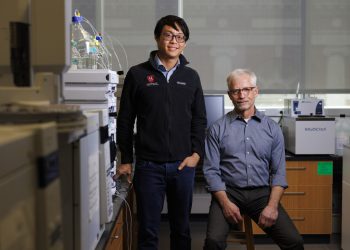
Andrew Grotzinger
The findings also provide key insight into the biological pathways and gene expression in brain cell types that may underly certain conditions, said co-corresponding author Jordan Smoller, director of the Psychiatric and Neurodevelopmental Genetics Unit in the Massachusetts General Hospital Center for Genomic Medicine and director of the Center for Precision Psychiatry in the Mass General Brigham Department of Psychiatry.
“These findings provide valuable clues for advancing our understanding and treatment of mental illness with greater precision,” added Smoller, a professor of psychiatry at Harvard Medical School and professor in the Department of Epidemiology at the Harvard T.H. Chan School of Public Health.
Pinpointing biological pathways
The paper points to specific biological pathways that may underlie the individual groupings.
For instance, genes that influence excitatory neurons, which are involved in transmitting signals across other neurons, tend to be over-expressed in both bipolar disorder and schizophrenia, the research suggests.
In internalizing disorders like depression and anxiety, variants in genes that control non-neuronal cells called oligodendrocytes were common. These specialized cells help maintain and protect the brain’s wiring infrastructure.
The findings suggest that some shared genetic factors play a role very early in brain development during the fetal stages of life, while others could have a greater influence later in adult life. This insight could help to create a more biological way of understanding psychiatric conditions and lead to new treatment strategies, the authors said.
According to one 2018 review, more than half of people diagnosed with one psychiatric disorder will be diagnosed with a second or third in their lifetime. About 41 percent will meet the criteria for four or more.
“Right now, we diagnose psychiatric disorders based on what we see in the room, and many people will be diagnosed with multiple disorders. That can be hard to treat and disheartening for patients,” said Grotzinger. “This work provides the best evidence yet that there may be things that we are currently giving different names to that are actually driven by the same biological processes.”
Grotzinger said it is too early to begin combining diagnoses based on the findings. But as researchers work to update the Diagnostic and Statistical Manual of Mental Disorders (DSM), the guiding handbook for the field of psychology, he hopes the new study will be considered.
“By identifying what is shared across these disorders, we can hopefully come up with strategies to target them in a different way that doesn’t require four separate pills or four separate psychotherapy interventions.”
This work was made possible by the contributions of the many investigators who comprise these working groups and the numerous grants from governmental and charitable bodies, as well as philanthropic donation. Additional details can be found in the paper’s acknowledgements section.